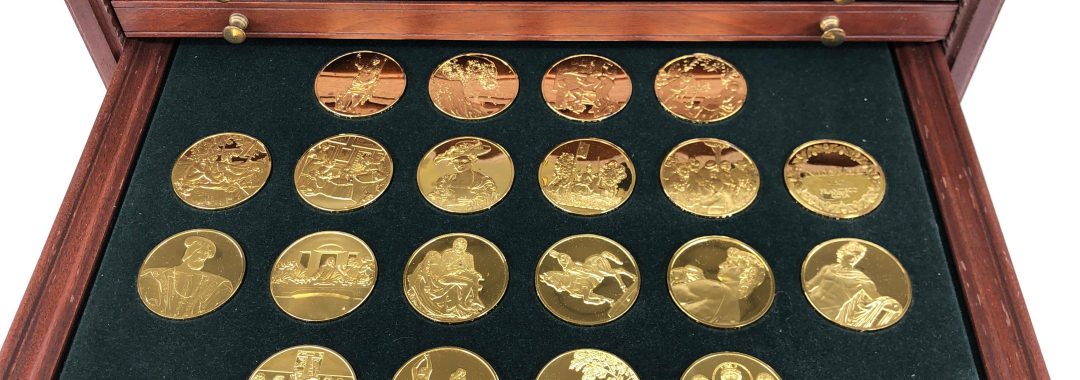
Collectors come in all shapes and sizes, and I’m not talking about the extreme hoarding cases you see on television. I mean the everyday sentimental savers — the folks who have a few boxes tucked away in closets, attics, or basements filled with things they’ve held onto for years. People keep old items for all kinds of reasons. Some believe the object might be useful “one day.” Others feel guilty throwing away something that still has a little life left in it, even if they know deep down they’ll never be the one to squeeze out that last bit of usefulness. And then there are those who keep unwanted gifts simply because they feel too guilty to let them go.
But there’s another group I call the “sentimental collectors.” These are the people who keep items because of the memories attached to them. I understand these folks completely — I have my own boxes of treasures.
My favorite keepsakes, though, were not from my family, it was from a family friend. A stuffed white Teddy Bear that I have had for 56 years. And my dogs and I have slept with that bear, and when I told the dog to bring it, she would have gingerly went and got it and brought it. Then she would lay on it.
Sentimental items like these deserve their place. They carry stories, identity, and connection. But there’s a line — and many people cross it without realizing. Some keep items simply because they once belonged to someone they loved, even if the item itself meant nothing to the original owner. Maybe it was something they never got around to donating. Maybe it was something they didn’t care about at all.
This is where downsizing gets tricky, especially when families begin sorting through estates. And this is exactly where auctions shine.
The Auction Reality Check: Sentimental vs. Market Value
As a professional auctioneer, I see this every week. Families bring boxes of “collectibles” they believe are valuable because they were marketed as such decades ago. But the truth is that many mass‑produced “collectibles” were never rare, never scarce, and never intended to appreciate in value. They were designed to look collectible — not be collectible.
This includes items like:
- Bradford Exchange figurines
- Danbury Mint Plates and Nick Nacks
- Franklin Mint plates and die‑cast pieces
- TV‑marketed coin collections
- Mass‑produced commemorative sets
These companies were masters of marketing. They used phrases like “limited edition,” “heirloom quality,” and “collector’s series” to create urgency and emotional attachment. But “limited edition” often meant millions produced. “Collector’s series” meant a product line designed to keep you buying the next piece. And “heirloom quality” meant nothing more than clever copywriting.
In the auction world, these items typically fall into the category of decorative but not valuable. They may sell, but usually for a fraction of their original purchase price. The sentimental value may be high, but the market value is low.
What Does Hold Value?
True collectibles — the kind that perform well at auction — share three traits:
- Scarcity
- Desirability
- Authenticity
A mass‑produced plate from a mint company is not scarce. A TV‑marketed coin set is not desirable to serious numismatists. And a “collector doll” made in the tens of thousands is not authentic in the sense of rarity.
On the other hand, items like:
- Vintage toys with original packaging
- Authentic military memorabilia
- Fine art and pottery
- True numismatic coins
- Historical documents
- Quality furniture
These items can perform extremely well at auction because they meet real collector criteria.
The Sentimental Rule
The key is simple: Save items because they hold warm, personal memories — not because someone once told you they were “collectible.”
Your grandmother’s handwritten recipe card? Keep it. Your father’s Valentine’s Day notes? Treasure them. Your mother’s sewing kit? Absolutely.
But the mass‑produced “collectible” plate she bought from a TV commercial? That can go.
The Space Rule
Make sure every sentimental item has earned the right to take up space in your world. If it brings joy, connection, or meaning, keep it. If it’s only there because someone else once owned it — or because a company convinced them it was valuable — let it go.
And if you’re unsure whether something has real market value, that’s where a professional auctioneer can help. A quick evaluation can save you time, space, and disappointment.