When you’re getting ready to sell your home , the question isn’t simply, “What can I renovate?”
The better question is:
“Where will my money make the biggest difference when a buyer sees my house?”
That’s an important distinction.
Homeowners often assume that a brand-new kitchen, luxury bathroom or finished basement will automatically add more to the sale price than it costs to build. In reality, many large remodeling projects don’t return their full cost at resale.
Current cost-versus-value data continues to show that relatively modest, highly visible improvements can outperform expensive renovations. Exterior projects, curb appeal, functional repairs and targeted updates are often more valuable than completely redesigning a home to suit your personal tastes.
And there is another important consideration in 2026:
You don’t necessarily need to make your house perfect. You need to make it competitive.
A buyer who has to choose between two homes at similar prices is going to notice the roof, exterior condition, flooring, kitchen, bathrooms, paint, windows, HVAC and overall maintenance. But that doesn’t mean you should spend $100,000 renovating a $400,000 house before putting it on the market.
Before spending money, determine what your house needs to compete with the other homes buyers will see.
Here are ten improvements worth considering.
1. Replace or Upgrade the Garage Door
Potential return: Very high
The garage door isn’t usually the first thing homeowners think about when they consider remodeling, but it consistently ranks among the strongest resale improvements.
Why?
Because buyers see it before they ever walk through the front door.
The 2025 Cost vs. Value data used for 2026 market guidance places garage-door replacement at the very top of the national rankings, with reported returns exceeding the original investment in many markets.
A damaged, dented, outdated or visibly worn garage door can make the entire exterior look neglected.
If yours is already in good condition, don’t replace it simply because a report says you should. But if it is obviously dated or damaged, this can be one of the smarter places to spend money.
2. Improve the Front Entry
Potential return: High
Your front door is one of the first things a prospective buyer sees.
A worn door, damaged trim, outdated hardware or poor lighting can make the house feel older before the buyer has even stepped inside.
A new steel entry door has historically ranked extremely well in cost-versus-value studies. The 2025 national data showed a particularly strong return for steel entry doors.
But you may not need an entirely new door.
Sometimes the better investment is:
- A professional paint job
- New hardware
- New house numbers
- Updated lighting
- Clean or replaced trim
- A new threshold
- Fresh landscaping around the entrance
The objective isn’t to create a magazine cover.
It is to make the buyer’s first impression a good one.
3. Fix the Things Buyers Will Use Against You
Potential return: Extremely high when the problem is significant
This isn’t a traditional “renovation,” but it may be the most important advice in this entire article.
If the roof leaks, fix the roof.
If the HVAC system is failing, address it.
If there is evidence of water intrusion, deal with it.
If the deck is unsafe, repair it.
If there are obvious electrical, plumbing, structural or safety issues, don’t spend $30,000 remodeling the kitchen while leaving a $10,000 problem for the buyer to discover during inspections.
A buyer doesn’t necessarily give you dollar-for-dollar credit for repairs you make, but unresolved problems can become negotiation leverage after the inspection.
In 2026, buyers are still looking carefully at condition, operating costs and deferred maintenance. A house that looks beautiful but has major functional problems can quickly become a liability.
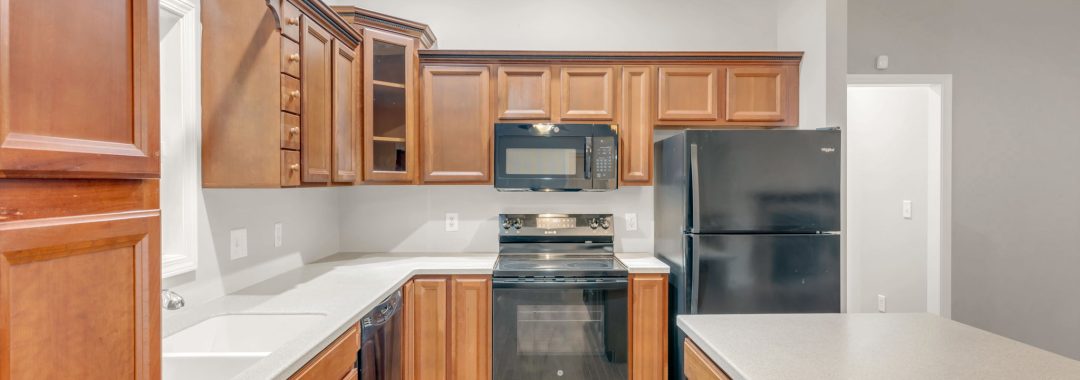
4. Give the Kitchen a Strategic Update
Potential return: Strong for a moderate remodel; much weaker for an extravagant one
Kitchens matter.
But there is a major difference between updating a kitchen and rebuilding a kitchen.
A moderate kitchen remodel can include:
- Painting or refacing cabinets
- New hardware
- Updated countertops
- Modern lighting
- New backsplash
- Updated flooring
- Replacing obviously outdated appliances
- Fresh paint
The national 2025 Cost vs. Value data showed a minor kitchen remodel recovering substantially more of its cost than a major upscale kitchen renovation.
That’s an important lesson for sellers.
If your kitchen is functional but dated, update it rather than rebuilding it.
And be careful about highly personal choices. A $70,000 kitchen designed around your preferences doesn’t automatically make a $400,000 house worth $470,000.
5. Update the Bathrooms — Don’t Necessarily Add One
Potential return: Moderate to strong
Bathrooms remain important to buyers, but adding an entirely new bathroom isn’t always the best financial decision.
If your existing bathroom is functional but dated, consider:
- New vanity
- Updated fixtures
- Better lighting
- Fresh paint
- New mirrors
- Updated flooring
- New shower fixtures
- Regrouting
- Replacing damaged tile
- Improving storage
Current remodeling data continues to show that midrange bathroom improvements can recover a meaningful portion of their cost, while expensive additions recover substantially less.
There is also a shift in what buyers want from bathrooms. Larger showers, better storage, improved lighting and accessibility features are becoming increasingly important.
But don’t automatically remove every bathtub.
If your house has only one bathroom and one bathtub, keeping it may make more sense than eliminating it simply because walk-in showers are fashionable.
6. Paint — But Don’t Overdo It
Potential return: High relative to cost
Paint remains one of the easiest ways to make a home look cleaner, newer and better maintained.
But painting every room isn’t necessarily necessary.
Prioritize:
- Dark rooms
- Scuffed walls
- Strong or unusual colors
- Areas with visible wear
- Rooms where different colors make the house feel disjointed
You don’t have to turn the entire house into a sea of gray.
In fact, current design preferences are moving toward warmer neutrals and more natural colors rather than the endless gray interiors that dominated the previous decade.
The goal is simple:
Make the house easy for buyers to imagine themselves living in.
7. Improve Curb Appeal
Potential return: High
Before a buyer evaluates your kitchen, bathroom or flooring, they evaluate your house from the street.
That makes curb appeal one of the least expensive ways to influence the first impression.
Start with the basics:
- Mow and edge the lawn
- Trim shrubs
- Remove dead plants
- Clean flower beds
- Pressure wash
- Clean gutters
- Repair damaged siding
- Clean the driveway
- Replace damaged exterior lighting
- Paint or repair the front door
- Remove unnecessary decorations
You may not need a landscape designer.
You may simply need the property to look maintained.
Exterior projects continue to dominate the highest-return categories in national remodeling data.
8. Replace or Repair Worn Flooring
Potential return: Moderate to high
Flooring can make a house look dramatically older than it actually is.
That doesn’t mean you should install $30,000 worth of new flooring throughout the house.
Look at what you already have.
Hardwood floors may need refinishing rather than replacement.
Carpet may need professional cleaning rather than replacement.
Damaged flooring in a high-traffic area may need to be replaced.
If the flooring is badly worn, mismatched or damaged, however, correcting it can have a substantial impact on how buyers perceive the home’s condition.
The key is consistency.
A buyer walking through a house with five different flooring types may see a collection of projects.
A buyer walking through a clean, coordinated house sees a home.
9. Make the House More Energy-Efficient and Functional
Potential return: Depends heavily on the property
In 2026, buyers aren’t looking only at what a house looks like.
They’re also thinking about what it costs to own.
That makes improvements such as:
- Efficient HVAC equipment
- Proper attic insulation
- Energy-efficient windows
- Updated weatherstripping
- Improved ventilation
- Programmable or smart thermostats
- Modern lighting
- Efficient appliances
worth considering when the existing systems are outdated.
But there is an important distinction between replacing an old system because it needs replacement and replacing a perfectly functional system simply because a newer model exists.
If your HVAC system is near the end of its useful life, replacing it may make more sense than installing an expensive kitchen island.
If the system is relatively new and functioning properly, document its age, maintenance and condition and move on.
10. Create Useful Space — Not Just More Space
Potential return: Highly market-dependent
The old advice was simple:
More square footage equals more value.
In 2026, the better question is:
What can the additional space actually do?
Today’s buyers increasingly value flexible spaces.
A spare bedroom that can function as a home office is useful.
A finished bonus room that can become a playroom, hobby room or office is useful.
A package room, mudroom, organized laundry area or flexible workspace can solve an actual problem for a buyer.
Recent 2026 buyer research shows particularly strong demand for purposeful rooms, including home offices, hobby rooms, playrooms and package-storage spaces.
That doesn’t mean you should build an addition before selling.
It means you should recognize the value already sitting inside your house.
An unfinished room may need nothing more than flooring, paint, lighting and organization to become a much more compelling part of the property.
What About a Finished Basement, New Deck or Major Addition?
These improvements can absolutely add value.
The problem is that adding value and recovering your investment are two different things.
A finished basement may make your home more attractive, but that doesn’t mean you will recover every dollar you spend.
The same is true for:
- Large additions
- Luxury kitchens
- High-end bathrooms
- Swimming pools
- Outdoor kitchens
- Sunrooms
- Custom built-ins
- Extensive landscaping
The 2025 Cost vs. Value data illustrates this clearly: major renovations generally recover a smaller percentage of their cost than targeted improvements. For example, the national data places basement remodeling around the 70% range and major upscale kitchen remodeling around roughly 50%, while several exterior projects perform substantially better.
That doesn’t mean these projects are bad.
It means they may be lifestyle investments rather than resale investments.
The Most Important Renovation May Be No Renovation at All
This is the part many homeowners don’t want to hear.
Sometimes the best financial decision is to sell the house as it is.
Before spending $50,000 renovating a property, determine what the renovation is actually going to accomplish.
If your house is worth $400,000 today and you spend $50,000 on improvements that make it worth $425,000, you haven’t created $50,000 of additional equity.
You’ve spent $50,000 to create $25,000 in additional market value.
That’s a bad investment if the only reason for doing the work is to increase the sale price.
On the other hand, if spending $10,000 on paint, landscaping, repairs and targeted updates helps you compete against homes selling for $425,000, the calculation may be very different.
Think Like a Buyer Before You Spend Like a Seller
The 2026 market requires sellers to be more strategic.
Buyers have more information than ever. They can compare your house against competing properties, look at photographs before scheduling a showing, research neighborhoods and scrutinize inspection reports.
That means the winning strategy isn’t necessarily “renovate everything.”
It’s:
Fix what is broken.
Improve what buyers notice.
Modernize what is obviously dated.
Remove distractions.
And don’t spend money that the market won’t recognize.
Before you begin a renovation, look at the properties that will actually compete with yours.
What do they have that you don’t?
What condition are they in?
What are buyers likely to compare?
And most importantly:
What will the market pay for your improvement?
That’s the number that matters.
A $50,000 renovation doesn’t make sense simply because it costs $50,000.
It makes sense when the market indicates that the improvement will help you sell faster, sell for more, reduce objections, or make your property more competitive.
In 2026, the smartest seller isn’t necessarily the one with the newest kitchen.
It’s the seller who knows where to spend money — and when to stop spending it.