Closing Your Business? A Professional Liquidation Can Make All the Difference

Few business owners begin their journey thinking about how it will eventually end. Whether you’re retiring after decades of hard work, moving into a new venture, or simply deciding it is time to close the doors, every business eventually reaches a point where its assets must be converted into cash. That process is known as liquidation, but successful liquidation is far more than simply selling equipment. It is the careful marketing of an entire business’s assets to produce the highest possible return while meeting legal and financial obligations.

Many owners assume liquidation means putting a few items on Facebook Marketplace, eBay, or another online marketplace and waiting for buyers to appear. While that approach may work for a lawn mower or an old desk, it rarely produces the best results for an entire business. Commercial equipment, machinery, vehicles, inventory, furniture, intellectual property, and even real estate each appeal to different types of buyers. Reaching those buyers requires a coordinated marketing effort, not dozens or hundreds of individual listings scattered across the Internet.

The first step in any business liquidation is understanding exactly what the business owns. Most people immediately think of equipment and inventory, but those are only part of the equation. Office furniture, computers, vehicles, trailers, shelving, manufacturing equipment, tools, and real estate all have value, but so do less obvious assets. Security deposits, refundable insurance premiums, customer deposits, accounts receivable, and prepaid services can often be converted into cash as well. Before any sale begins, these assets should be identified, documented, and evaluated so that nothing of value is overlooked.

Just as important are the intangible assets that many owners forget they possess. A recognizable business name, established website, customer database, telephone numbers, trademarks, copyrights, patents, supplier agreements, and favorable lease terms may all carry significant value. Competitors entering your market may have little interest in your desks or filing cabinets, but they may be willing to pay a premium for years of customer relationships or a respected brand name. In today’s economy, intangible assets frequently represent a substantial portion of a company’s overall value, and they deserve the same level of marketing attention as any physical asset.

This is where many business owners unintentionally leave money on the table. Liquidation is often viewed as simply disposing of unwanted property, but professional auctioneers understand that liquidation is actually a marketing business. The objective is not merely to sell; it is to create competition among qualified buyers. Every additional bidder increases the likelihood of achieving true market value. Modern auction marketing combines targeted email campaigns, industry databases, social media advertising, search engine marketing, direct outreach to equipment dealers and investors, and national advertising to expose assets to buyers who are actively searching for them. Instead of hoping someone local happens to need a particular piece of equipment, a professionally marketed auction places that equipment in front of buyers across the country—and sometimes around the world.

Many owners underestimate the amount of time required to sell an entire business one item at a time. Every listing requires photographs, descriptions, pricing, communication with prospective buyers, scheduling inspections, negotiating terms, collecting payment, and coordinating pickup or shipping. Multiply that process by several hundred assets, and what appears to be a cost-saving measure quickly becomes a full-time job. Meanwhile, the business continues to incur expenses. Insurance premiums continue, utilities remain connected, rent or mortgage payments continue, property taxes accumulate, and valuable management time is consumed by selling instead of planning the next chapter. A professionally managed auction compresses months of individual sales into a coordinated marketing campaign followed by a defined sale period, allowing the business to move forward more efficiently.

One of the most common questions owners ask is, “What is my equipment worth?” Unfortunately, the answer is almost never what they originally paid for it. Neither purchase price nor replacement cost determines fair market value. Fair market value is simply the price that a willing buyer is prepared to pay a willing seller after the asset has been exposed to the open marketplace. Advertised asking prices on websites often bear little resemblance to actual selling prices. Insurance values are designed to replace equipment, not measure resale value. Appraisals provide useful guidance, but they still represent an opinion. The marketplace ultimately decides value, and nothing demonstrates current market value more effectively than competitive bidding among qualified buyers.

Business owners also have important legal responsibilities throughout the liquidation process. If the company has outstanding debts, owners cannot simply transfer valuable equipment to friends or relatives for a fraction of its value or hide assets from creditors. Depending upon the financial condition of the business, owners, officers, managers, and directors may owe fiduciary duties to creditors as well as shareholders. Assets should be marketed openly and sold in a transparent manner that demonstrates every reasonable effort was made to obtain fair market value. Proper documentation and competitive marketing not only maximize returns but also help protect owners from future claims that assets were improperly disposed of.

Some assets require additional attention before they can be sold. Equipment financed through banks or leasing companies may be subject to liens or lease agreements that limit an owner’s ability to sell without the lender’s approval. Vehicles often carry title liens, and machinery may have Uniform Commercial Code filings attached to it. Before liquidation begins, these interests should be identified so lenders, attorneys, accountants, and auctioneers can coordinate an orderly disposition that satisfies all legal requirements. Resolving these issues before the sale prevents delays and gives buyers confidence that clear title can be transferred.

While owners naturally focus on physical assets, outstanding accounts receivable deserve equal attention. Money owed to the business becomes increasingly difficult to collect once operations cease. Customers may delay payment or assume no one is monitoring collections. Collecting receivables before closing often produces the greatest recovery, although businesses may also consider selling receivables to a factoring company when immediate cash flow is more important than collecting the full balance over time.

Another frequently overlooked opportunity involves recovering money that has already been paid. Workers’ compensation premiums, liability insurance, utility deposits, prepaid service contracts, and other refundable expenses can often generate additional cash during the wind-down process. Individually these amounts may seem small, but together they can significantly improve the final financial outcome.

For business owners who lack the time, experience, or desire to manage every aspect of liquidation themselves, hiring a professional auctioneer can dramatically simplify the process. An experienced auctioneer develops the marketing strategy, prepares the inventory, photographs and catalogs the assets, coordinates inspections, manages bidder registration, conducts the auction, collects payment, supervises asset removal, and provides a complete accounting after the sale. Instead of managing hundreds of individual transactions, the owner works with one experienced professional whose responsibility is to maximize exposure and produce competitive bidding.

Matthew Price, Auctioneer & Real Estate Broker specializes in helping business owners transition through this important stage. Whether the business consists of a restaurant, retail store, manufacturing facility, construction company, automotive shop, office complex, or commercial real estate portfolio, every liquidation begins with the same objective: exposing the assets to the largest possible audience of qualified buyers. Through extensive marketing, nationwide buyer outreach, and transparent auction methods, assets receive the competitive exposure necessary to achieve current market value rather than simply accepting the first available offer.

Closing a business represents the end of one chapter, but it should not mean leaving money behind. A properly planned liquidation transforms years of investment into capital that can satisfy creditors, meet legal obligations, and provide owners with the strongest possible financial position for whatever comes next. With professional guidance, strategic marketing, and competitive bidding, liquidation becomes more than simply selling assets—it becomes the final successful transaction of the business itself.

Sustainability in A Throw-Away Culture

Today I read an article claiming you can buy top‑quality furniture for less than what you’d pay at IKEA, Walmart, or Rooms‑To‑Go — companies that have mastered selling what today’s young buyers think they want.

But here’s the problem: when you don’t understand the culture you’re marketing to, you misunderstand the people themselves — and how they perceive value.

The Pressboard Illusion

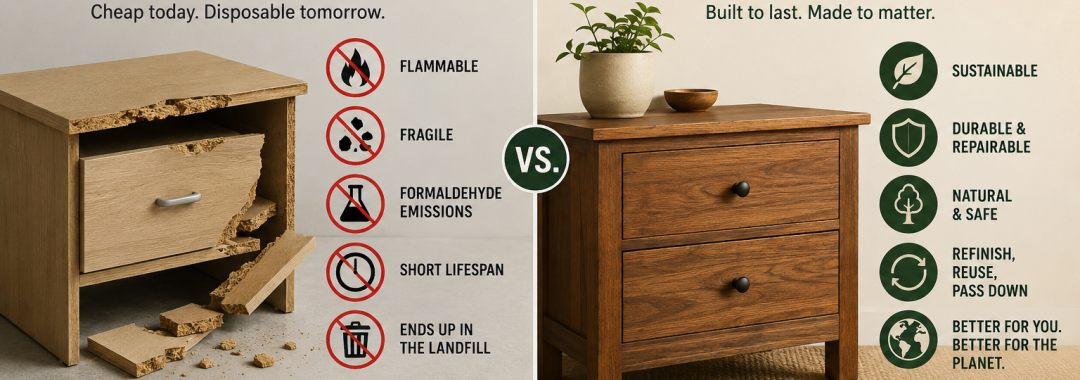
Many younger buyers — especially those in their early twenties — walk into big‑box furniture stores believing they’re purchasing sustainable, high‑quality pieces. What they’re actually buying is pressboard furniture, made from compressed sawdust and cardboard.

It’s marketed as eco‑friendly, but it’s not. It’s flammable, fragile, and short‑lived. The appeal is simple: it’s cheap.

For those unfamiliar, pressboard is created by pressing and heating layers of wood particles to form a fabricated “board.” It looks solid, but it’s not built to last. It’s the furniture equivalent of fast fashion — disposable, trendy, and ultimately wasteful.

The Sustainability Myth

Pressboard’s marketing mirrors that of the Toyota Prius — advertised as environmentally friendly, yet the production and disposal of its batteries leave environmental scars. Consumers equate “saving gas” with sustainability, just as they equate “saving money” with eco‑conscious furniture.

But sustainability isn’t about short‑term savings. It’s about longevity, repairability, and responsible materials — qualities pressboard simply doesn’t have.

The Marketing Disconnect

So how do we get rid of this secondhand furniture? The same way we handle any product that’s lost its shine — through smart marketing. Whether it’s a Boy Scout fundraiser, a new product launch, or even a spray‑on hair product promising youth, success depends on logical, targeted messaging.

If your marketing doesn’t make sense, neither will your results.

The Hidden Health Hazard

Let’s look deeper. Some particle boards are manufactured using urea formaldehyde resin, which releases formaldehyde gas — a known health hazard. When trapped indoors, that gas builds up, creating poor air quality and potential respiratory issues.

So not only is pressboard not eco‑friendly — it’s not safe. And when it’s discarded, it must be burned, adding yet another environmental burden.

The Assembly Experience

On the surface, pressboard furniture seems convenient. It’s lightweight, easy to transport, and comes in a flat box you can fit in your car. You get home, spread out the pieces, and start assembling — excited for the challenge.

Four hours later, you’re on the floor deciphering cryptic pictograms, searching for someone fluent in “Allen wrench hieroglyphics.”

That’s the first disadvantage. The second? Try moving it. Once dried out or exposed to moisture, it cracks, swells, and breaks. Pressboard furniture rarely survives more than three years — especially for renters or frequent movers. By the last move, it looks like a rummage‑sale relic.

The Turning Point

Furniture isn’t a big deal — until you move. That’s when cheap construction shows its true cost.

A recent story from The Professor’s House captured this perfectly:

“I finally replaced the pressboard jobs I had purchased only three years before. I bought high‑quality solid wood furniture. It’s beautiful. It didn’t take an assembly team or tools to make them functional, and the delivery people were wonderfully careful not to gouge up my house.”

That’s the difference between disposable and durable.

The Return to Real Wood

This isn’t about Victorian dark wood furniture — only a handful of collectors still chase that style. It’s about a new generation, 40 and younger, rejecting fast fashion and embracing solid wood furnishings.

Why? Because they’re sustainable. They can be re‑upholstered, refinished, reused, and passed down.

According to Barnebys, furniture sales in 2018 rose 32% over previous years, driven largely by younger buyers seeking mid‑century modern, colonial, and classic designs.

As Barnebys’ Pontus Silfverstolpe noted:

“Today it’s possible to buy a high‑quality object made by hand in the 1800s for less than the cost of a piece of IKEA furniture.”

The secondhand market has become more accessible, with buyers favoring craftsmanship and durability over quantity. Quality pays — not just for your wallet, but for the environment.

The Bottom Line

The eco‑friendly argument always circles back to the same truth: trees and time. Solid wood furniture is durable, repairable, and genuinely sustainable.

Buy solid wood first. It’s not just furniture — it’s a long‑term investment in quality, craftsmanship, and conscience.

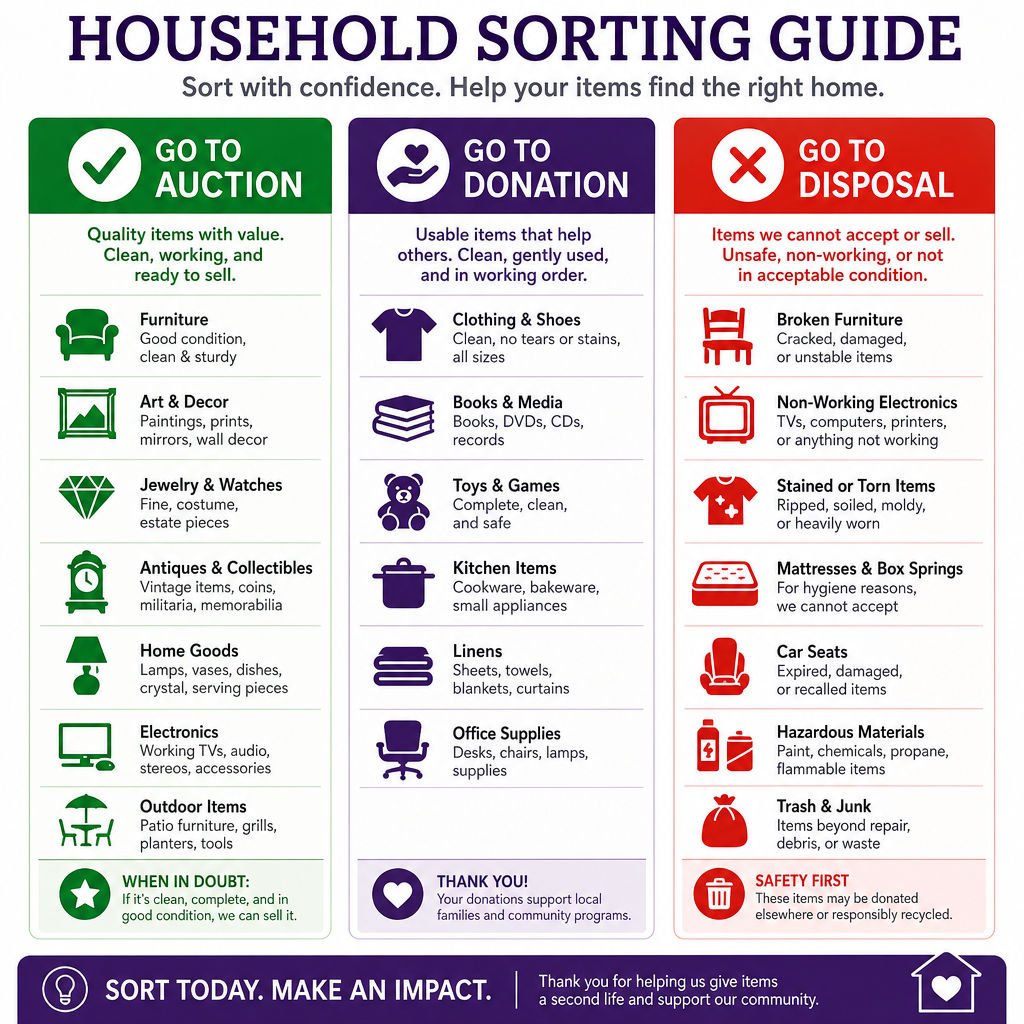
List of Items Not Accepted For Sale

(Updated and expanded to reflect common nonprofit restrictions)

Furniture & Large Household Items

  • Broken or damaged furniture — including cracked, missing parts, glued repairs.
  • Upholstered furniture that is torn, stained, mildewed, pet‑soiled, or missing cushions.
  • China cabinets & oversized furniture (too large to resell or transport).
  • Mattresses & box springs (Goodwill, Salvation Army, Habitat do NOT accept).
  • Sofa beds, recliners, sleeper sofas (mechanisms often broken; high disposal cost).
  • Large entertainment centers (obsolete and unsellable).
  • Particle‑board furniture that is swollen, peeling, or unstable.

Personal Hygiene & Medical Items

  • Personal hygiene tools — clippers, razors, needles, lancets.
  • Toiletries — shampoos, lotions, mouthwash, powders (nonprofits cannot verify safety).
  • Feminine hygiene products — tampons, pads, Depends, medicated wipes.
  • Medications & supplements — herbs, vitamins, syrups, ointments.
  • Hair tools — brushes, combs, curlers, wigs, dryers, hot rollers, curling irons.
  • Hearing aids, dentures, teeth (biohazard concerns).
  • Medical testing supplies — anything that may have contacted bodily fluids.

Clothing & Fabric Items

  • Undergarments — bras, panties, boxers, lingerie, pantyhose, socks.
  • Soiled linens, pillows, mattress pads (nonprofits cannot sanitize them).
  • Moldy or mildewed textiles of any kind.

Baby & Child Safety Items

  • Drop‑side cribs (federally banned).
  • Car seats (expiration & safety liability).
  • Strollers (unless new and certified safe).
  • High chairs with missing straps or recalls.

Food & Beverages

  • Food items of any kind (except sealed pantry donations to food banks).
  • Liquor/alcohol — only accepted if sealed in original packaging.

Financial & Personal Documents

  • Old bills, mail, medical records
  • Checkbooks, ledgers, tax papers
  • Family photos, videos, DVDs (privacy & sensitivity concerns)

Household Waste & Unsanitary Items

  • Dirty waste cans
  • Used toilet brushes
  • Used kitchen scrubbies
  • Shower curtains (unless new)
  • Soiled bath mats

Hazardous Materials

  • Fuels, oils, paints, pesticides
  • Lead, asbestos
  • Mercury items — fluorescent lamps, thermometers, thermostats, CFL bulbs
  • Chemicals or liquids — pool supplies, acids, bleaches, detergents
  • Expired or empty fire extinguishers

Automotive Items

  • Old worn‑out tires (dry rot)
  • Expired or used batteries

Adult Content

  • X‑rated magazines, posters, videos, DVDs

Electronics & Technology

  • Outdated technology — CRT monitors, towers, printers, fax machines
  • Software discs
  • Loose parts or cables
  • Older televisions — only newer flat‑screen digital models accepted
  • Cassette players, VHS players, tapes (no resale market)

Wildlife & Taxidermy

  • Bird mounts or fish mounts
  • Pronghorn antelope or bobcats without proper tags
  • Any taxidermy with damage or deterioration

Books & Printed Material

  • Encyclopedias
  • Law books
  • Magazines
  • Stacks of newspapers

Appliances

  • Dirty or uncleaned appliances
  • Refrigerators/freezers not cleaned out
  • Broken appliances of any kind

Access & Handling Requirements

  • Items stored in attics must be brought down to the main floor.
  • No broken items — must be clean, complete, and functional.
  • No cracked, glued, or missing‑part items.

Disposal Policy

If any prohibited items are included, and Matthew Price, Auctioneer & Real Estate Broker must dispose of them:

  • Seller is responsible for all disposal costs
  • Includes labor, handling, loading, hauling, dump fees
  • Costs will be deducted from sale proceeds
  • Seller reimburses all disposal expenses in full

Donation Alternatives

SPCA Needs

  • Cat litter (clumping & non‑clumping)
  • Cat food (pâté)
  • Kitten & puppy food
  • High‑quality brands: IAMS, Purina ONE, Science Diet, Blue Buffalo
  • Dog treats (training‑quality)

Emergency Food Pantries

  • Canned goods
  • Dry goods

Hygiene & Toiletries

  • New, unopened items only

Paper Shredding

  • Community shredding drives
  • County shredding services

County Recycling

  • Cardboard
  • Aluminum
  • Plastics
  • Metals (Check county website for hours & locations)

Eyeglasses

  • Lions Club
  • Walmart optical centers
  • Local eye doctors

Military Missions in Action

  • Furnishes homes for veterans returning from service
  • Accepts furniture & household items

Choosing the Best Liquidation Strategy

Deciding how to handle a lifetime of accumulated belongings is a significant responsibility that carries both financial and emotional weight. As an estate executor or representative, selecting the most suitable liquidation method is crucial for achieving a smooth process and maximizing returns. The two primary options—estate sales and auctions—operate quite differently, making it essential to understand their distinctions, benefits, and potential risks before proceeding.

High-Level Comparison

Estate sales and auctions differ in several fundamental ways. Estate sales use fixed, research-based retail prices set for each item, while auctions rely on dynamic pricing determined in real time through competitive bidding. Estate sales typically run over a 2–3 day on-site period, whereas auctions are often completed in a single day, a few hours, or within a defined online bidding window. Buyers at estate sales enjoy a relaxed, browse-and-buy retail shopping experience inside the home, in contrast to the fast-paced, competitive environment of auctions, which may be in-person, online, or hybrid. Estate sales work best for general household contents, everyday items, furniture, and tools. Auctions are ideal for high-value collections, fine art, rare antiques, and unique specialty pieces.

The core distinction lies in value realization: estate sales capture value through carefully researched tag pricing, while auctions leverage open-market competition to potentially achieve peak demand prices. It is not proper to call estate tag sales establishing fair market value due to the complexity of the pricing models. Whereas auctions establish the current fair market value through the bid process, where a buyer bids as high as they would like on the property, an estate tag sale negotiates prices lower.

How Estate Sales Work

An estate sale converts a private home into a multi-day pop-up retail store. Professional liquidators begin by sorting, researching, appraising, and staging every item throughout the property, ranging from living room furniture to kitchenware and garage tools. Once prepared, the doors open to the public for two to three days. Buyers browse at their own pace and make purchases at the marked prices, which are generally firm on the first day and then discounted progressively on following days to help clear out remaining inventory. This approach sometimes delivers full-house liquidation, typically allowing the entire process—from initial consultation to final cleanout—to wrap up within one to three weeks.

How Auctions Work

Auctions establish value through direct bidder competition and can take place via live in-person events, timed online platforms, or hybrid formats. The process involves cataloging and photographing items before presenting them to bidders, with the highest bidder winning each item or lot. An auctioneer calls bids in real time during live events, or an online platform handles timed bidding. This format creates urgency and momentum that can drive up prices for sought-after items. As a result, auctions concentrate buyer interest into a decisive event, making them particularly effective for high-demand assets where competitive bidding can unlock maximum market value. A key advantage is that auction companies typically sell the property down to the bare walls, removing nearly everything and eliminating additional hauling, disposal, or storage costs for the seller.

When an Estate Sale Is the Better Choice

Estate sales are purpose-built for whole-home liquidation, especially when the goal is to systematically clear out the complete contents of a property. They excel at monetizing everyday value by pricing and selling nearly every minor item individually—such as linens, kitchen utensils, cleaning supplies, garden tools, and decor—which auction houses might otherwise skip or bundle into bulk lots. The on-site format is particularly advantageous for bulky items like furniture and appliances, as buyers can inspect them in context and typically arrive prepared with trucks and labor for removal. Estate sales also draw a broad local audience, including casual shoppers, neighbors, dealers, collectors, and bargain hunters, providing wide exposure across all types of inventory. Additionally, they offer predictable timelines that align well with real estate closing deadlines or probate schedules.

However, estate tag sales carry notable risks. If items that have a viable market do not sell during the sale period, they remain behind, potentially leaving the seller responsible for further removal, donation, or disposal efforts and associated costs.

When an Auction Makes More Sense

Auctions provide clear advantages when dealing with targeted, rare, or high-value items where fixed pricing might not capture full potential. They are especially effective for fine art, rare coins, luxury jewelry, firearms, or classic cars, as competitive bidding among passionate collectors can push final prices well beyond initial estimates. Online auction platforms extend global exposure to specialized buyers rather than relying solely on local foot traffic. Auctions also deliver a clear paper trail and high conversion rates through definitive event dates and transparent transaction records.

The Combined Hybrid Strategy

In many cases, the most profitable approach combines both methods. High-value art, rare coins, or standout collectibles can be directed to specialty auctions to reach targeted global buyers. The remaining household contents—furniture, kitchen supplies, everyday decor, tools, and clothing—can then be sold through an on-site estate sale. This dual strategy ensures each asset type is matched with the selling environment optimized for its highest return.

Costs, Fees, and Buyer’s Premiums

Estate sale companies generally charge a seller’s commission of 30% to 40% of total gross sales. This rate is typically all-inclusive, covering setup, labor, appraisal, marketing, staffing, and post-sale cleanup, with the company’s incentives fully aligned to overall performance.

Auction houses usually apply a lower seller’s commission, often between 15% and 25%. To manage costs like professional photography, marketing, cataloging, and overhead, they commonly add a buyer’s premium—an additional percentage paid by the winning bidder on top of the hammer price. This structure benefits sellers by shifting much of the operational burden to buyers, resulting in lower commission rates and a larger share of the base sale price retained.

Decision-Making Framework

To help determine the best path, consider the nature of the assets being liquidated. If the estate consists of an entire household with mixed inventory and a fast cleanout is needed, an estate sale is typically the right choice—provided you accept the risk that unsold items with potential market value may remain. For high-value or rare items such as fine art, coins, or niche collections, an auction generally makes more sense, especially when you want everything sold down to the bare walls to avoid lingering removal costs. When the estate includes both standout specialty pieces and a full house of general contents, a combined hybrid approach often delivers the strongest results.

Evaluating the inventory early with a qualified liquidation professional provides an honest assessment and guides you toward the strategy that maximizes financial return while minimizing stress.

In the case of a hoarder home, an auction is likely the best solution. Many estate sale companies do not handle the real estate, whereas many auctioneers who are dual licensed do, either by auction or traditional real estate.