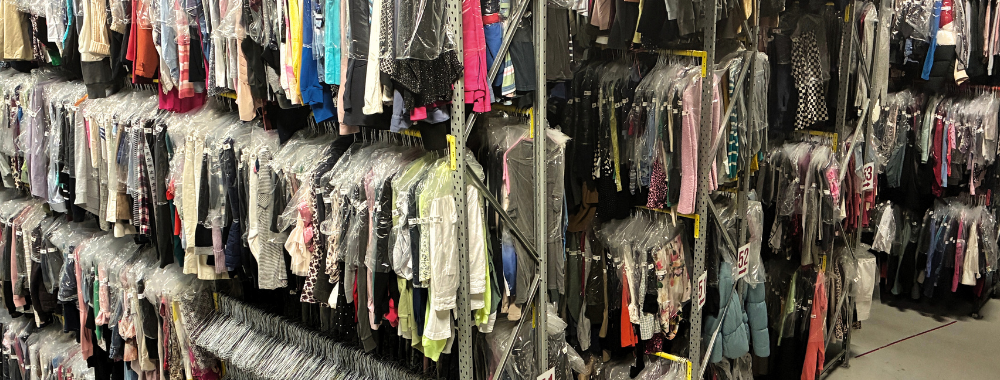
For decades, the donation bin has served as a convenient moral release valve for consumers in wealthy nations — a place to drop last season’s shirts, impulse‑buy dresses, and fast‑fashion castoffs with the comforting belief that these garments would find a second life. In the background, a vast commercial ecosystem quietly handled the flow: global traders collected, sorted, graded, and shipped used clothing to markets where it could be reworn, repurposed, or recycled into industrial materials. This system moved more than 24 billion items of clothing annually and generated over $4.9 billion in trade value by 2024 .
But that once‑stable cycle is now breaking down. Fashion trends are accelerating at unprecedented speed, and ultra‑cheap new clothing increasingly competes directly with secondhand garments. At the same time, many low‑income countries — historically the largest importers of used clothing — are restricting or rejecting secondhand imports due to concerns about waste colonialism, environmental harm, and damage to domestic textile industries . Without major changes in how clothing is produced, consumed, and marketed, the world is heading toward a textile‑waste crisis of staggering proportions.
No place feels this shift more acutely than Panipat, India, a dusty industrial city of roughly 450,000 residents located 55 miles north of Delhi. For more than two decades, Panipat has been the world’s largest recycler of woolen garments — a critical pressure valve for the global used‑clothing trade. The city processes hundreds of thousands of tonnes of textile waste annually, with some estimates reaching 1 million tonnes per year across more than 20,000 industrial units and a workforce of at least 300,000 people . Its recycling cluster generates more than ₹1,30,000 crore (€13 billion) in turnover and exports around ₹30,000 crore (€3 billion) worth of goods annually .
Panipat’s mills historically specialized in shoddy — a low‑grade yarn produced by shredding discarded woolen garments. Shoddy became the backbone of the global relief‑blanket market. At its peak in the early 2010s, Panipat produced 100,000 blankets per day, supplying 90% of the world’s disaster‑relief blankets. But the economics of shoddy have shifted dramatically. Beginning in the early 2000s, Chinese manufacturers invested in modern, high‑capacity mills capable of producing far more blankets in a wider range of colors and at competitive prices. Today, a new polar‑fleece blanket retails for about $2.50, barely more than the $2.00 cost of a recycled shoddy blanket — a price gap so small that most relief agencies now prefer new fleece products .
As a result, Panipat’s traditional shoddy industry has contracted sharply. In 2013, virtually no local mills produced new fleece blankets; today, around 50 mills do, many using Chinese‑built machinery. Ramesh Woolen Mills, for example, doubled its daily output after installing a modern fleece line in 2016, shifting two‑thirds of its production to polar fleece. Consumers appreciate the improved quality, color variety, and rapid turnaround times — but this pivot has profound consequences for the global waste stream.
Even if Panipat were still operating at its shoddy peak, it could not absorb the tidal wave of clothing now entering the waste pipeline. Between 2000 and 2015, global clothing production doubled, while the average number of wears per garment fell by 36% — and by 70% in China, where fast fashion dominates consumption patterns . The result is a bleak paradox: the volume of secondhand clothing is exploding, even as the markets capable of reusing or recycling it are shrinking.
The environmental implications are severe. The textile industry already produces more greenhouse‑gas emissions than all international flights and maritime shipping combined, and as recycling markets collapse, more clothing will be incinerated or landfilled, accelerating emissions and pollution. Meanwhile, the human cost is rising. Panipat’s workers — many of whom sort and shred clothing without protective gear — report chronic respiratory illness, skin conditions, and other health issues linked to constant exposure to lint, dyes, microplastics, and chemical residues .
The industry knows it must change. Climate change threatens cotton yields, water availability, and supply‑chain stability, making garment production more expensive and unpredictable. Some brands, including H&M and Patagonia, are experimenting with recycled fibers and closed‑loop systems. Others are exploring durability‑focused strategies such as warranties, lifespan labeling, and repair guarantees. Subscription‑based fashion rental models — like China’s YCloset — offer another potential path for satisfying consumer appetite for novelty while reducing waste.
Still, none of these emerging solutions can fully replace the role once played by Panipat and other mill towns that transformed wealthy nations’ castoffs into affordable goods for the world’s poor. That era is ending. The challenge now is to build a new system — one that aligns production with planetary limits, protects workers, and reduces the relentless churn of disposable fashion.
The global secondhand trade is no longer a virtuous cycle. It is a warning signal. And the world must listen.