
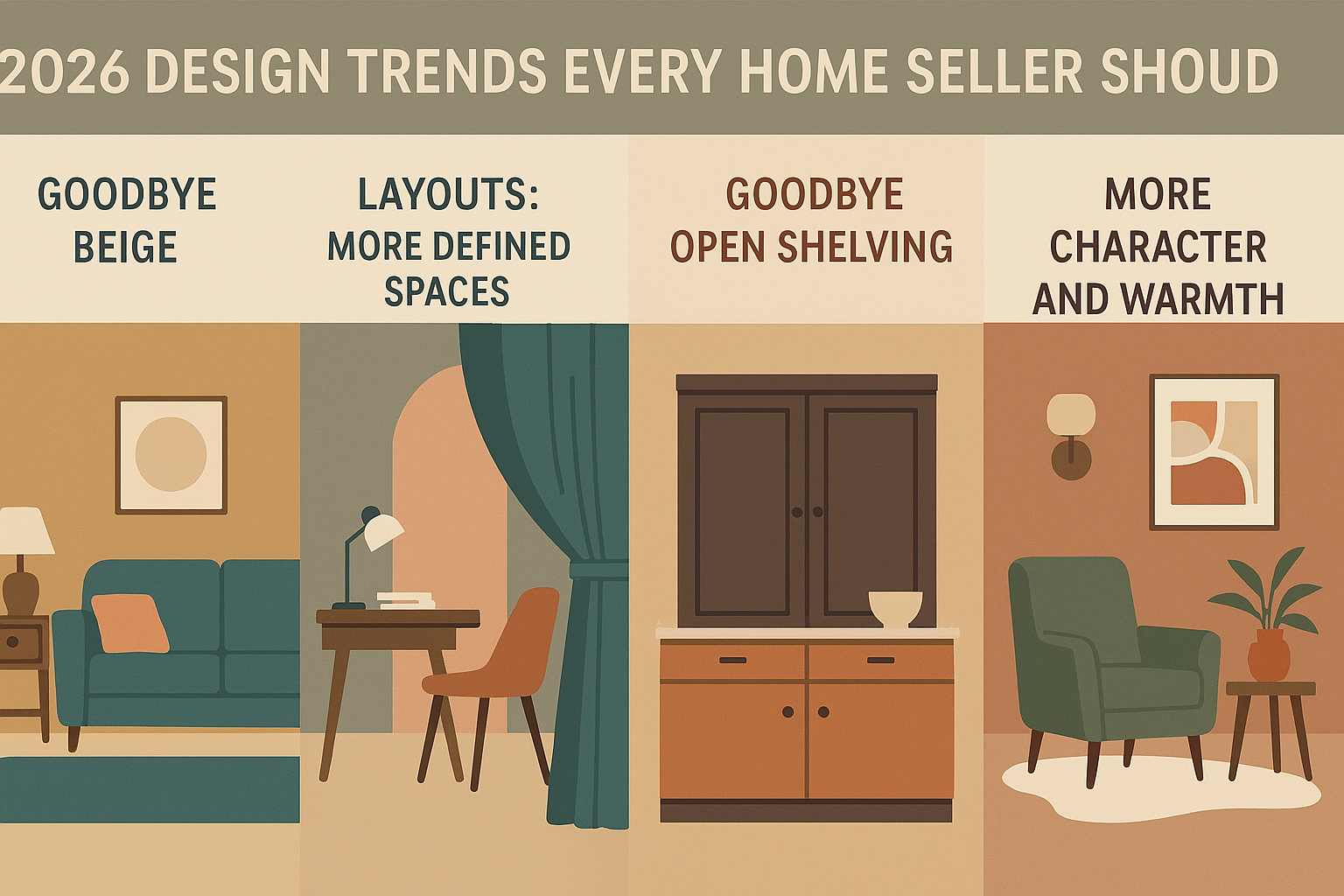
If you’re thinking about selling your home in 2026, here’s the truth: design trends matter more than ever. Buyers aren’t just looking for a house—they’re looking for a feeling, a lifestyle, and a space that reflects who they are right now. Some trends are timeless, some are personal preference, and others… well, they’ve officially worn out their welcome.
Let’s break down the biggest design shifts sellers should pay attention to this year.
Goodbye Beige: Buyers Want Color With Personality
For years, beige was the “safe” choice. Yellow‑beige, gray‑beige, green‑beige—you could walk into a home and see three different versions of it on the walls. The idea was simple: keep things neutral so rooms feel bigger and brighter.
But in 2026, buyers—especially millennials and Gen Z—want something more expressive. They’re gravitating toward:
- Warm caramels
- Soft, modern blues
- Clean, balanced grays
- Muted earth tones that feel natural, not dated
These colors still make a home feel open, but they also create emotion. When paired with thoughtful staging, they help buyers imagine a lifestyle, not just a floor plan. Beige doesn’t do that anymore.
The Open Concept Isn’t the Must‑Have It Used to Be
Open floor plans dominated the last decade, but after years of working, relaxing, and living in the same wide‑open space, buyers want more definition. Privacy is becoming a premium feature.
People want:
- A place to work
- A place to relax
- A place to cook
- A place to escape
All without feeling like everything is happening in one giant room.
Designers are responding with creative solutions—room dividers, partial walls, built‑ins, area rugs, and even curtains—to give open layouts more structure. Buyers still appreciate openness, but they also want the ability to close a door and focus.
Open Shelving Is Losing Its Shine
Open shelving looked great on Instagram, but in real life, it requires constant upkeep. After years of dealing with clutter, homeowners are craving simplicity and hidden storage.
Buyers now prefer:
- Closed cabinets
- Storage coffee tables
- Built‑in shelving with doors
- Pantries that hide the chaos
They want clean lines and organized spaces without having to curate every dish and mug on display.
Sterile, One‑Size‑Fits‑All Design Is Out
Minimalist, mid‑century modern, and “perfectly neutral” homes had their moment. But in 2026, buyers want warmth, character, and authenticity.
Expect to see more:
- Regional design influences
- Handcrafted or artisan pieces
- Mixed finishes
- Layered textures
- Unique, memorable details
Homes that feel too standardized or “staged to death” are losing appeal. Buyers want spaces that feel lived‑in, not sterile.
Custom Homes Aren’t Automatically a Selling Advantage
This one surprises a lot of sellers: custom homes—especially those built around very specific tastes—don’t always translate well to today’s buyers.
Why? Because custom often means personal, and personal doesn’t always sell.
Highly specific layouts, unusual finishes, or ultra‑open designs can actually turn buyers away. With more people working from home, buyers want flexible spaces, privacy, and practical layouts—not someone else’s dream home that doesn’t fit their lifestyle.
What This Means for Sellers in 2026
If you’re preparing to list your home, the goal isn’t to chase every trend—it’s to understand what today’s buyers value:
- Warmth over sterility
- Personality over blandness
- Privacy over wide‑open everything
- Function over form
- Flexibility over custom quirks
A few strategic updates can make a huge difference in how buyers perceive your home—and how quickly it sells.